The Definitive Guide to Automating Documents in 2026

Stacy Wu
-
December 3, 2025
-
6 mins

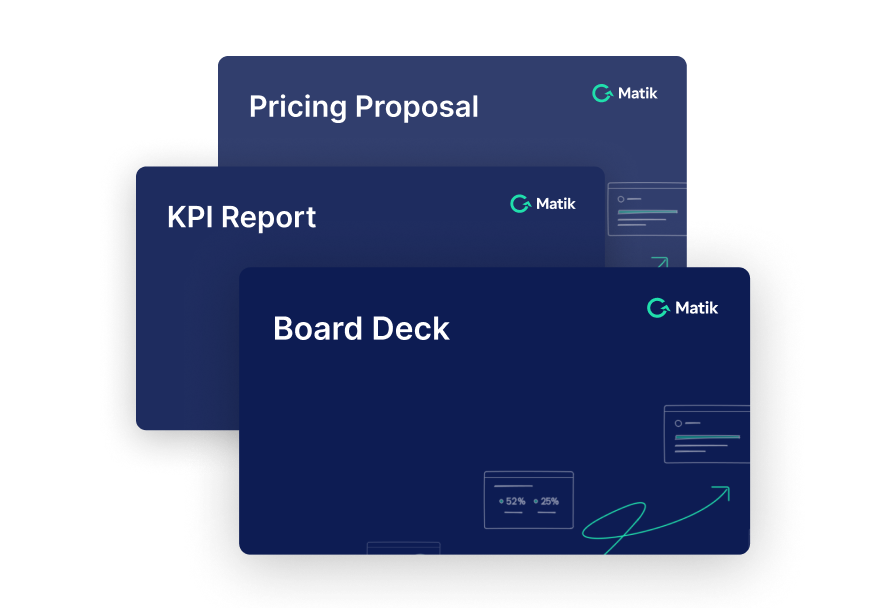
Document work, whether it’s reports, summaries, or contracts, is where strategy either comes to life or gets stuck in admin. In 2026, the teams that win are the ones that turn data into ready-to-share documents quickly, confidently, and at scale. This guide breaks down how to automate documents end to end so your organization can spend less time formatting or pulling numbers and more time making better decisions, serving customers, and driving revenue.
Document work sits at the heart of how modern companies sell, support, and report. Teams still spend a surprising amount of time manually recreating similar documents, updating numbers, and chasing data across systems, which slows decision-making and increases the risk of errors. By automating document creation with AI-powered tools, organizations can cut manual effort by more than half and free people to focus on strategic analysis, sales enablement, customer conversations, and other higher value projects.
The growth of the intelligent document processing and document management markets underscores how critical this shift has become. The intelligent document processing market is expected to rise from approximately $10.6 billion in 2025 to more than $66 billion by 2032, according to a 2024 market analysis from Fortune Business Insights. Similarly, the document management systems market is forecast to grow from around $7.4 billion to over $25 billion by 2033, based on research published by SNS Insider. These projections signal a broad industry movement away from manual, ad hoc document handling and toward fully standardized, automated workflows. Teams that adopt automation early are better positioned to respond quickly to stakeholders, maintain consistent narratives, and make decisions based on up-to-date, trusted information instead of outdated metrics and one-off spreadsheets.
Document automation is evolving beyond basic templates into intelligent, context-aware workflows. Several trends stand out for 2026:
AI models now understand unstructured text, tables, and layouts well enough that many intelligent document processing tools achieve extraction accuracies above 90 percent for common document types. Instead of manually handling every file, companies are increasingly adopting “human‑in‑the‑loop” review models where teams only supervise edge cases and exceptions, treating automation as the default path for routine document work.
Companies are increasingly turning to document automation as a way to reduce compliance risk and standardize how sensitive information is handled. Recent surveys show that roughly 60 percent of organizations adopting intelligent document processing cite regulatory and compliance requirements as a primary driver, especially in finance, healthcare, and other highly regulated industries.
Document automation is shifting from on‑premises, bespoke systems to cloud‑native platforms that are easier to deploy and maintain. This trend is driven by shorter implementation timelines, lower infrastructure overhead, and the ability to roll out standardized document workflows across distributed teams.
What used to be a side project owned by IT or a single department is becoming part of the core operating fabric for revenue, finance, operations, and analytics teams. As organizations connect document automation to their BI tools, CRMs, and data warehouses, automated documents are increasingly treated as authoritative, up‑to‑date views of the business rather than one‑off artifacts.
When evaluating document automation platforms, focus on how well each solution fits your data, workflows, and governance requirements.
Key questions to ask:
A strong fit should reduce manual work quickly, minimize change management friction, and create a path to scale across teams and regions.
Automation delivers significant upside, but implementation can also introduce challenges if not managed intentionally.
Common hurdles include:
With the right framework, governance, and adoption plan, these barriers become manageable, and automation turns into a reliable engine for consistent, data-driven documents.
When evaluating automation platforms, it’s crucial to start with tools that seamlessly connect to your data, scale personalization, and reduce friction for end users. Here’s a look at some of the document automation tools gaining attention in 2026.
Focus first on documents you produce most often (for example, monthly KPI reports, customer health summaries, or standard contracts) so teams feel the impact quickly. A legal-focused analysis of document automation ROI found that automating repetitive document creation can cut drafting time by 75–90 percent for complex documents, which makes high-volume workflows the best place to start.
Align on structure, branding, and required fields across teams so every automated document follows the same pattern. Research on intelligent document processing shows that early automation projects typically deliver a 30–200 percent ROI in year one primarily by reducing labor and rework tied to inconsistent document formats.
Integrate your document automation with your BI tools, CRM, data warehouse, and spreadsheets so documents always pull the latest, trusted metrics. Workflow automation benchmarks show that replacing manual re-keying with integrated workflows can reduce data-entry errors by up to 90 percent and cut document processing time by 60–70 percent.
Apply business rules to show or hide sections, swap visuals, or adjust language based on audience, segment, or region so documents feel tailored without manual editing. B2B buying research from McKinsey and other firms consistently finds that relevant, personalized digital content drives higher engagement and deal momentum than generic collateral, especially in complex sales cycles.
Define who can edit templates, who approves content, and how versions are updated so teams can move fast without creating brand or compliance risk. According to Orange Bridge, only 12% of marketing-growth leaders have implemented a fully structured content governance framework, leaving a major opportunity for organizations to boost efficiency and accuracy by adopting clear governance.
Co-design templates with sales, customer success, finance, and operations so sections, language, and metrics match real-world workflows. A case study from Gridfox shows that a multinational tech company that used a structured template to identify and involve key stakeholders saw a 30% increase in project approval rates, proving that early and active stakeholder engagement leads to better outcomes and smoother adoption.
Launch automation with a small cohort, collect feedback, and refine templates and rules before rolling out to the entire organization. Harvard Business Review notes that organizations that pilot and iterate are far more likely to achieve successful adoption and avoid costly setbacks than those that attempt a big-bang rollout.
Track how many documents are generated, how long they take, where errors happen, and which templates get used so you can tune your system over time. Organizations that actively monitor KPIs like time saved, error reduction, and cycle times are far more likely to report clear cost and productivity gains from automation initiatives.
Use the same data sources and logic across documents and slides so numbers and narratives stay aligned in QBR decks, one-pagers, and detailed reports. Finance and FP&A leaders emphasize that a single source of truth for metrics reduces confusion and improves alignment in executive meetings, especially when multiple teams depend on the same numbers.
Offer lightweight training so people know how to read the data, explain it to customers or executives, and decide what to do next. Harvard Business Review notes that many organizations struggle to become truly data-driven because employees lack confidence and skills to work with data, which makes data literacy and enablement key to actually acting on insights.
To understand whether document automation is working, track both efficiency and business outcome metrics.
Key measures include:
Establishing a baseline and revisiting these metrics quarterly helps make the ROI of document automation visible to leadership.
Matik automates the creation of presentations, documents, and reports directly from your data, powered by AI you can trust. Pull from dashboards, reports, and data in your BI, CRM, data warehouse and other sources to instantly produce on-brand, insight-rich content in formats you already use today. Trusted by teams at Okta, Asana, Autodesk, Samsara, and Zapier, Matik empowers any team to align messaging, scale best practices, and tell consistent data stories that drive action - faster than ever.
Using Matik, operations, analytics, finance, and enablement teams can automate recurring reports, executive summaries, customer one-pagers, and internal updates from the same trusted metrics that power their dashboards. Matik’s AI is guided by guardrails and if-then logic so it shares the right message and insights for each audience and scenario, while enforcing consistency, accuracy, and standardization across all users. Workflow automation features also let you generate content on a schedule, in bulk, or based on triggers, and deliver it directly to colleagues, prospects, and customers.
Teams at Okta, Asana, Autodesk, Samsara, and Zapier trust Matik to automate presentations, documents, and reports directly from their data. Revenue and customer success leaders use Matik to standardize QBR reports, health summaries, and ROI narratives so that every stakeholder sees the same definitions, metrics, and stories. Analytics and finance teams rely on Matik to eliminate last-mile manual work when turning analysis into stakeholder-ready content for executives and boards.
Customer examples include:
These stories illustrate how automating documents and presentations with Matik helps organizations scale consistent, impactful communication without adding headcount.
Document automation is moving toward more autonomous, context-aware systems. AI agents will increasingly handle end-to-end workflows, from interpreting source data through generating narratives and dispatching content at the right time. As markets for document AI and intelligent document processing grow rapidly, leading solutions will emphasize trustworthy AI, data connectivity, and strong governance so teams can rely on automated documents as a source of truth.
Organizations that invest now in mature document automation platforms, aligned with strong data and content strategies, will be positioned to deliver consistent, timely, and personalized communication across every stakeholder touchpoint.
---
Bring data trust, brand consistency, and scalable storytelling into one workflow. Learn more about Matik

Document work, whether it’s reports, summaries, or contracts, is where strategy either comes to life or gets stuck in admin. In 2026, the teams that win are the ones that turn data into ready-to-share documents quickly, confidently, and at scale. This guide breaks down how to automate documents end to end so your organization can spend less time formatting or pulling numbers and more time making better decisions, serving customers, and driving revenue.
Document work sits at the heart of how modern companies sell, support, and report. Teams still spend a surprising amount of time manually recreating similar documents, updating numbers, and chasing data across systems, which slows decision-making and increases the risk of errors. By automating document creation with AI-powered tools, organizations can cut manual effort by more than half and free people to focus on strategic analysis, sales enablement, customer conversations, and other higher value projects.
The growth of the intelligent document processing and document management markets underscores how critical this shift has become. The intelligent document processing market is expected to rise from approximately $10.6 billion in 2025 to more than $66 billion by 2032, according to a 2024 market analysis from Fortune Business Insights. Similarly, the document management systems market is forecast to grow from around $7.4 billion to over $25 billion by 2033, based on research published by SNS Insider. These projections signal a broad industry movement away from manual, ad hoc document handling and toward fully standardized, automated workflows. Teams that adopt automation early are better positioned to respond quickly to stakeholders, maintain consistent narratives, and make decisions based on up-to-date, trusted information instead of outdated metrics and one-off spreadsheets.
Document automation is evolving beyond basic templates into intelligent, context-aware workflows. Several trends stand out for 2026:
AI models now understand unstructured text, tables, and layouts well enough that many intelligent document processing tools achieve extraction accuracies above 90 percent for common document types. Instead of manually handling every file, companies are increasingly adopting “human‑in‑the‑loop” review models where teams only supervise edge cases and exceptions, treating automation as the default path for routine document work.
Companies are increasingly turning to document automation as a way to reduce compliance risk and standardize how sensitive information is handled. Recent surveys show that roughly 60 percent of organizations adopting intelligent document processing cite regulatory and compliance requirements as a primary driver, especially in finance, healthcare, and other highly regulated industries.
Document automation is shifting from on‑premises, bespoke systems to cloud‑native platforms that are easier to deploy and maintain. This trend is driven by shorter implementation timelines, lower infrastructure overhead, and the ability to roll out standardized document workflows across distributed teams.
What used to be a side project owned by IT or a single department is becoming part of the core operating fabric for revenue, finance, operations, and analytics teams. As organizations connect document automation to their BI tools, CRMs, and data warehouses, automated documents are increasingly treated as authoritative, up‑to‑date views of the business rather than one‑off artifacts.
When evaluating document automation platforms, focus on how well each solution fits your data, workflows, and governance requirements.
Key questions to ask:
A strong fit should reduce manual work quickly, minimize change management friction, and create a path to scale across teams and regions.
Automation delivers significant upside, but implementation can also introduce challenges if not managed intentionally.
Common hurdles include:
With the right framework, governance, and adoption plan, these barriers become manageable, and automation turns into a reliable engine for consistent, data-driven documents.
When evaluating automation platforms, it’s crucial to start with tools that seamlessly connect to your data, scale personalization, and reduce friction for end users. Here’s a look at some of the document automation tools gaining attention in 2026.
Focus first on documents you produce most often (for example, monthly KPI reports, customer health summaries, or standard contracts) so teams feel the impact quickly. A legal-focused analysis of document automation ROI found that automating repetitive document creation can cut drafting time by 75–90 percent for complex documents, which makes high-volume workflows the best place to start.
Align on structure, branding, and required fields across teams so every automated document follows the same pattern. Research on intelligent document processing shows that early automation projects typically deliver a 30–200 percent ROI in year one primarily by reducing labor and rework tied to inconsistent document formats.
Integrate your document automation with your BI tools, CRM, data warehouse, and spreadsheets so documents always pull the latest, trusted metrics. Workflow automation benchmarks show that replacing manual re-keying with integrated workflows can reduce data-entry errors by up to 90 percent and cut document processing time by 60–70 percent.
Apply business rules to show or hide sections, swap visuals, or adjust language based on audience, segment, or region so documents feel tailored without manual editing. B2B buying research from McKinsey and other firms consistently finds that relevant, personalized digital content drives higher engagement and deal momentum than generic collateral, especially in complex sales cycles.
Define who can edit templates, who approves content, and how versions are updated so teams can move fast without creating brand or compliance risk. According to Orange Bridge, only 12% of marketing-growth leaders have implemented a fully structured content governance framework, leaving a major opportunity for organizations to boost efficiency and accuracy by adopting clear governance.
Co-design templates with sales, customer success, finance, and operations so sections, language, and metrics match real-world workflows. A case study from Gridfox shows that a multinational tech company that used a structured template to identify and involve key stakeholders saw a 30% increase in project approval rates, proving that early and active stakeholder engagement leads to better outcomes and smoother adoption.
Launch automation with a small cohort, collect feedback, and refine templates and rules before rolling out to the entire organization. Harvard Business Review notes that organizations that pilot and iterate are far more likely to achieve successful adoption and avoid costly setbacks than those that attempt a big-bang rollout.
Track how many documents are generated, how long they take, where errors happen, and which templates get used so you can tune your system over time. Organizations that actively monitor KPIs like time saved, error reduction, and cycle times are far more likely to report clear cost and productivity gains from automation initiatives.
Use the same data sources and logic across documents and slides so numbers and narratives stay aligned in QBR decks, one-pagers, and detailed reports. Finance and FP&A leaders emphasize that a single source of truth for metrics reduces confusion and improves alignment in executive meetings, especially when multiple teams depend on the same numbers.
Offer lightweight training so people know how to read the data, explain it to customers or executives, and decide what to do next. Harvard Business Review notes that many organizations struggle to become truly data-driven because employees lack confidence and skills to work with data, which makes data literacy and enablement key to actually acting on insights.
To understand whether document automation is working, track both efficiency and business outcome metrics.
Key measures include:
Establishing a baseline and revisiting these metrics quarterly helps make the ROI of document automation visible to leadership.
Matik automates the creation of presentations, documents, and reports directly from your data, powered by AI you can trust. Pull from dashboards, reports, and data in your BI, CRM, data warehouse and other sources to instantly produce on-brand, insight-rich content in formats you already use today. Trusted by teams at Okta, Asana, Autodesk, Samsara, and Zapier, Matik empowers any team to align messaging, scale best practices, and tell consistent data stories that drive action - faster than ever.
Using Matik, operations, analytics, finance, and enablement teams can automate recurring reports, executive summaries, customer one-pagers, and internal updates from the same trusted metrics that power their dashboards. Matik’s AI is guided by guardrails and if-then logic so it shares the right message and insights for each audience and scenario, while enforcing consistency, accuracy, and standardization across all users. Workflow automation features also let you generate content on a schedule, in bulk, or based on triggers, and deliver it directly to colleagues, prospects, and customers.
Teams at Okta, Asana, Autodesk, Samsara, and Zapier trust Matik to automate presentations, documents, and reports directly from their data. Revenue and customer success leaders use Matik to standardize QBR reports, health summaries, and ROI narratives so that every stakeholder sees the same definitions, metrics, and stories. Analytics and finance teams rely on Matik to eliminate last-mile manual work when turning analysis into stakeholder-ready content for executives and boards.
Customer examples include:
These stories illustrate how automating documents and presentations with Matik helps organizations scale consistent, impactful communication without adding headcount.
Document automation is moving toward more autonomous, context-aware systems. AI agents will increasingly handle end-to-end workflows, from interpreting source data through generating narratives and dispatching content at the right time. As markets for document AI and intelligent document processing grow rapidly, leading solutions will emphasize trustworthy AI, data connectivity, and strong governance so teams can rely on automated documents as a source of truth.
Organizations that invest now in mature document automation platforms, aligned with strong data and content strategies, will be positioned to deliver consistent, timely, and personalized communication across every stakeholder touchpoint.
---
Bring data trust, brand consistency, and scalable storytelling into one workflow. Learn more about Matik